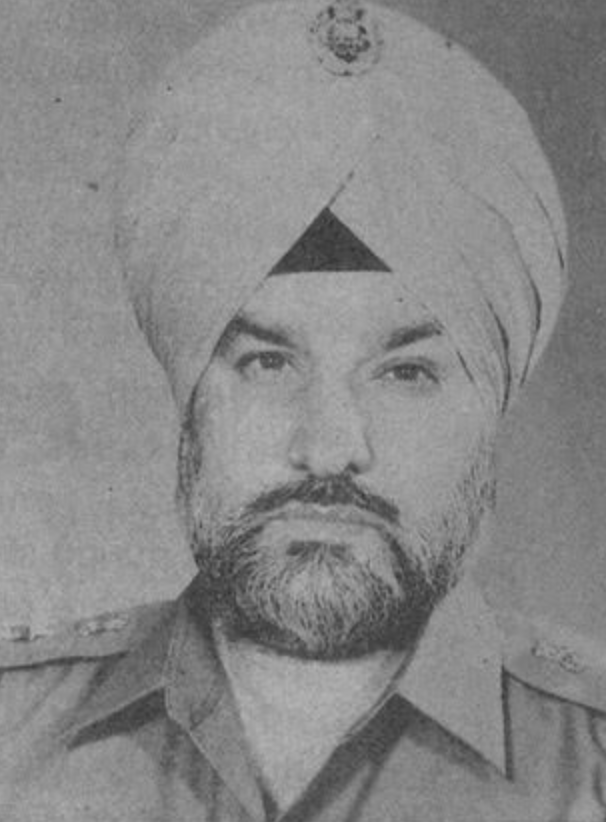
Ajit Singh Sandhu


At least Enforced Disappearances/Extrajudicial Executions

The dossier on Ajit Singh Sandhu visualizes and lists cases of enforced disappearances and extrajudicial executions reportedly committed by him and agents operating under his authority during his tenure as Senior Superintendent of Police (SSP). He served as SSP across four jurisdictions in Punjab.

The number of cases presented here is an undercounting of the violations perpetrated during his tenure. This data draws from Ensaaf’s interviews with surviving family members, other witnesses, and public records. Cases lacking complete incident dates or locations have been excluded. Without this information, it is difficult to determine whether those abuses were committed by Sandhu or his agents. This dataset also excludes incidents in which Sandhu or his agents arbitrarily detained or tortured individuals, but did not murder or disappear them.

We will continue to update the cases of enforced disappearances and extrajudicial executions attributable to Sandhu as additional information emerges. To a large extent, however, this record and the complete truth remains with the Government of India.

Command History

Unless otherwise noted, Ajit Singh Sandhu’s command history draws from the following sources: (1) news reports from the Punjabi daily Ajit and the English daily Tribune (Chandigarh), and (2) the individual websites of Punjab’s police districts, listing the names of Senior Superintendents of Police (SSP) and their dates of tenure. This information draws from publicly available records/sources; the Government of India retains the complete account of Sandhu’s official postings and activities, however.

Ajit Singh Sandhu joined the Punjab Police Service (PPS), not the Indian Police Service (IPS). During the counterinsurgency, the Government of India irregularly promoted the most notorious PPS officers to the Indian Police Service, allowing them to hold senior command positions. According to a seniority list of PPS officers, Ajit Singh Sandhu joined the PPS in June 1986, and was officially promoted to IPS on September 1, 1990.

Ajit Singh Sandhu bears command responsibility for at least cases of abductions, extrajudicial executions, and/or enforced disappearances.

  • SSP Majitha, March 1, 1990 - July 21, 1990


  • SSP Kapurthala, July 22, 1990 - March 27, 1991


  • SP (Investigation) Chandigarh and other positions,
    March 28, 1991 - December 4, 1991


  • SSP Tarn Taran, December 5, 1991 - September 30, 1993


  • SSP Ropar (Rupnagar), October 1, 1993 - January 22, 1995


  • SSP Tarn Taran, January 23, 1995 - December 4, 1995


Personal Participation
  • cases directly implicating Ajit Singh Sandhu in abduction, disappearance, and/or killing

Known Promotions

Ajit Singh Sandhu allegedly committed suicide, while out of jail on parole, on May 23, 1997. According to The Wire, the Government of India had twice awarded him with the President’s Award for Gallantry. Sandhu reportedly had 16 legal cases pending against him when he died.


Legal Cases / Select News Articles

Ajit Singh Sandhu directly participated in the abduction, torture, and killing of at least two human rights defenders, Kuljit Singh Dhatt and Jaswant Singh Khalra. Sandhu also regularly made false reports to the press about alleged encounter killings, hiding extrajudicial executions, including the deaths of 6 villagers he used as human shields.

Kuljit Singh Dhatt: On July 23, 1989, Punjab policemen, led by Deputy Superintendent of Police (DSP) Ajit Singh Sandhu, abducted Kuljit Singh Dhatt, Gurmel Singh, Surjit Singh, and other individuals from Gurmel Singh’s house. On August 2, 1989, the Tribune shared a statement by a political activist that police had tortured Dhatt to death in custody.
Ajit, July 22, 1990, p. 6, “Be told about corrupt policemen.” Sandhu, the newly appointed SSP Kapurthala, met with the residents of Dhilwan. He promised that if a police official took a bribe, action would be taken against the perpetrator
Ajit, February 14, 1991, p. 6, “3 militants died in district Kapurthala.” SSP Kapurthala, Ajit Singh Sandhu, reported on crime statistics in Kapurthala district for January, including the alleged genuine encounter killings of 3 militants. Punjab police often reported unlawful killings as genuine encounters of unidentified militants. Ensaaf documented the extrajudicial executions or disappearances of 3 individuals in January 1991 in Kapurthala: Gurmej Singh, whose family directly implicated Sandhu in the abduction and unlawful killing; Prithipal Singh, whose family directly implicated Sandhu in the abduction and unlawful killing; and Balwinder Singh.
Ajit, June 10, 1992, p. 1, “Bhai Behla, 8 other militants, 1 soldier, and 3 policemen killed in heavy encounter near Tarn Taran” and June 18, 1992, p. 5, “All 9 individuals who were killed in Behla village were militants - Police’s claim.” On June 8, 1992, SSP Sandhu forced at least 6 villagers from Behla to act as human shields during an encounter with militants. SSP Ajit Singh Sandhu led Punjab policemen, as well as Army and paramilitary units, on an attack on an abandoned house used as a hideout by militants. Before storming the house, the security forces abducted the villagers and made them walk in front. The following villagers died as human shields: Niranjan Singh, Lakhwinder Singh, Sakatar Singh, Kartar Singh, Gurmej Singh, and Ajit Singh. Read more in Reduced to Ashes, pp. 194-195. The Ajit articles, however, state that only one civilian was killed. The police further alleged that Niranjan Singh was wanted in 9 cases, Lakhwinder Singh was wanted in 11 cases, Sakatar Singh was wanted in 9 cases, and Kartar Singh was involved in 7 cases.
Ajit, June 29, 1992, p. 1, “20 killed…” SSP of Tarn Taran, Ajit Singh Sandhu, and SSP of Amritsar led a joint operation and killed several militants in an alleged encounter. The police alleged that the following individuals died in genuine encounters, although surviving family members reported them as extrajudicial executions to Ensaaf: Dilbagh Singh, abducted from home in front of his family, and Pargat Singh. Sandhu reported that Dilbagh Singh was allegedly wanted in over 500 murders and other cases.
Ajit, March 21, 1993, p. 1, “5 militants killed including Jagbir Singh Jagga.” Ajit Singh Sandhu reported that Jagbir Singh, supposedly Deputy Chief of the Khalistan Commando Force, was killed in an alleged genuine encounter that also recovered 8 bombs and 40 electronic detonators. Jagbir Singh’s family reported to Ensaaf that Punjab Police abducted Jagbir Singh weeks earlier and killed him in an extrajudicial execution.
Ajit, March 31, 1993, p. 1, “3 militants killed including Bhindrawala Tiger Force new head Balwinder Singh RibeiroB.” Whereas Sandhu alleged that Balwinder Singh’s killing was a genuine encounter, Balwinder Singh’s family reported that police abducted him 2 weeks earlier, held him in illegal detention, and then killed him unlawfully.
Ajit,September 26, 1993, p. 1, “3 militant brothers killed by the hands of security forces.” On September 25, SSP Tarn Taran, Ajit Singh Sandhu, reported that Tarn Taran police had killed 3 militants that day in an alleged encounter, after the militants recently returned from Pakistan. According to Sandhu, police killed Lt. General Sarabjit Singh of the militant group Khalistan Commando Force (KCF), and KCF Area Commanders Rajbir Singh and Onkar Singh, sons of Bachan Singh. Surviving family members, however, reported these killings as extrajudicial encounters. According to family members, Tarn Taran police from Verowal abducted 20 to 21-year-old Rajbir Singh, 16 to 17-year-old Onkar Singh, and Sarabjit Singh –all Jalandhar residents–from a friend or relative’s residence prior to killing them. The families reported that none of the men were militants. Sandhu alleged that these three men had committed 200 crimes since 1990 and had sought refuge in Pakistan. Sandhu stated that the police surrounded the 3 men and killed them in a 3-hour encounter, recovering weapons and a rocket launcher.
Tribune, March 31, 1994, p. 3, “Kanwar was held in Ahmedabad.” A witness reported that on May 17, 1993, Punjab Police, led by SSP Ropar (Rupnagar) Ajit Singh Sandhu (then SSP Tarn Taran), travelled to another Indian state and abducted Kanwar Singh Dhami, his wife Kuldip Kaur, and their 5-year-old son, as well as this witness. This countered the police claim that they detained these individuals in Ropar on March 27, 1994. The witness produced statements from 1993, and the abduction had also been reported in the Tribune in 1993. The Punjab Police brought the detainees back to Punjab and subjected them to illegal detention and torture. The article states, "With the transfer of Mr. Ajit Singh Sandhu, SSP, Tarn Taran to Ropar, Kanwar Singh and his wife were also taken to Ropar district and were presented to the newsmen at Chandigarh yesterday."
Tribune, April 13, 1994, p. 5, “Counsel visits Dhami in jail.” Lawyers for Kanwar Singh Dhami and his wife reported that Kulbir Kaur suffered a miscarriage on April 11, from police torture.
Tribune, January 7, 1995, p. 12, “Contempt notice to Ropar SSP.” The High Court issued a contempt notice to Ropar SSP Ajit Singh Sandhu and Kurali SHO Gurcharan Singh on a petition filed by Pawan Kumar Bansal, alleging the SSP directed the SHO to resolve a dispute in favor of his relative. Fearing harassment, the petitioner had secured anticipatory bail from the Additional Sessions Judge on December 12, 1994. Despite this, Ropar police abducted the petitioner and forced him to pay 25,000 rupees to the SSP’s relative.
Tribune, January 18, 1995, p. 4, “Notice to Gill, SSP in Dhami case.” The High Court issued a notice to Director General of Police (DGP) KPS Gill and SSP Ajit Singh Sandhu based on a petition filed by Kulbir Singh Dhami, his wife Kulbir Kaur, and their 6-year old son Kanwar Ranbir Singh. The petition alleges that SSP Sandhu illegally detained them for 10 months, and that police torture caused Kulbir Kaur to suffer a miscarriage in detention.
Tribune, February 6, 1995, p. 5, “Panjwar urged to surrender.” SSP Tarn Taran Ajit Singh Sandhu denied reports by human rights groups like Amnesty International about mass cremations in Punjab of victims of unlawful police killings.
September 6, 1995: Punjab Police, led by SSP Ajit Singh Sandhu, abducted human rights defender Jaswant Singh Khalra. On November 16, the Tribune reported that the Supreme Court had ordered the Punjab Government to immediately transfer SSP Sandhu “far-off” from Tarn Taran.
Tribune, November 23, 1995, p. 4, “Govt fails to transfer SSP.” Despite a November 14 order by the Supreme Court of India, the Punjab Government had failed to transfer SSP Ajit Singh Sandhu out of Tarn Taran. The Court ordered his transfer for the duration of an inquiry into the abduction and disappearance of human rights defender Jaswant Singh Khalra.
Tribune, December 3, 1995, pp. 1, 20, “Baba Charan Singh ‘was tortured’.” During an inquiry ordered by the Punjab & Haryana High Court, Kanwar Singh Dhami gave testimony alleging that SSP Ajit Singh Sandhu participated in torturing Baba Charan Singh at CIA Staff Tarn Taran in May 1993. Dhami stated that he shared a cell with Charan Singh; Baba Charan Singh told him about the unlawful killings of his family and his own torture by the Tarn Taran police. After sharing the cell that night, SSP Sandhu and other police tortured both Charan Singh and Dhami. 27 years later, on January 9, 2020, a special CBI court sentenced 6 policemen to rigorous imprisonment. Sandhu had been accused, but allegedly committed suicide during the investigation.

Key Human Rights Reports and Documentaries

Key Statistics of cases directly implicating Ajit Singh Sandhu:

Victim Demographics 

Gender

97.0% Male 64
 
 
3.0% Female 2

Marital status

45.5% Not married 30
 
 
54.5% Married 36

If married, did the victim have children?

50.0% Yes 33
 
 
4.5% No 3


Total children surviving victims: 101


Religion

100.0% Sikh 66
 

Caste

84.8% Jat 56
 
 
15.2% Non-Jat 10

Age

4.5% 0-17 3
 
56.1% 18-33 37
 
21.2% 34-49 14
 
13.6% 50-64 9
 
3.0% 65+ 2
 
1.5% Age unknown 1
 

Education

15.2% No education 10
 
10.6% Primary school 7
 
22.7% Middle school 15
 
36.4% High school 24
 
1.5% Some college 1
 
4.5% College degree 3
 
1.5% Graduate degree 1
 
3.0% Vocational degree 2
 

Employment

43.9% Farmer/agriculture 29
 
9.1% Shopkeeper 6
 
6.1% Student 4
 
4.5% Day labourer 3
 
3.0% Unemployed 2
 
1.5% Driver (bus/truck/car) 1
 
1.5% Mechanic 1
 
1.5% Housewife 1
 
28.8% Other 19
 

Urban / Rural

86.4% Rural 57
 
 
12.1% Urban 8

Abduction, Detention, & Torture 

Prior detentions

36.4% Yes 24
 
 
63.6% No 42

Prior torture

25.8% Yes 17
 
 
10.6% No 7

Abduction preceding enforced disappearance/extrajudicial execution

98.5% Yes 65
 
 
1.5% No 1

Security officials informed witnesses where they were taking the victim

33.3% Yes 19
 
 
56.1% No 32

Witnesses to abduction

86.4% Yes 57
 
 
3.0% No 2

Victim abduction location

27.3% Victim’s residence 18
 
12.1% Roadside 8
 
10.6% Village fields 7
 
9.1% Police station 6
 
7.6% Friend/relative's residence 5
 
4.5% Shop/market 3
 
1.5% Checkpoint (naka) 1
 
1.5% Bus station/stand 1
 
22.7% Other 15
 

Detention facility type

Data forthcoming


Preceding detention location known

74.2% Yes 49
 
 
24.2% No 16

Witnesses to detention preceding enforced disappearance/extrajudicial execution

Data forthcoming


Security official response to victim status

18.2% Other 12
 
16.7% Denied involvement 11
 
15.2% Gave no response 10
 
13.6% Admitted extrajudicial execution with no explanation 9
 
10.6% Told family to go to another police station 7
 
4.5% Killed victim in an “encounter” 3
 
4.5% Victim had escaped 3
 
3.0% Admitted custody only 2
 

Victim presented before judge/magistrate

4.5% Yes 3
 
 
74.2% No 49

Enforced Disappearances vs. Extrajudicial Executions 

Classification

84.8% Extrajudicial executions 56
 
 
15.2% Enforced disappearances 10

Number of victims per family

68.2% 1 victim 45
 
18.2% 2 victim 12
 
7.6% 3 victim 5
 
1.5% 4 victim 1
 
4.5% 7 victim 3
 

Related incidents

4.5% Genuine encounters in family 3
 
 
95.5% No genuine encounters in family 63

Body Disposal 

Security forces returned body

3.0% Yes 2
 
0.0% Yes, but forced immediate cremation 0
 
81.8% No 54
 

Body disposal by security forces

24.2% Cremated the body 16
 
10.6% Dumped body in canal or river 7
 

Condition of corpse, if known

3.0% Bullet wounds 2
 
1.5% Other 1
 

Security Forces Implicated 

Names of involved security officials known

100.0% Yes 66
 
 
0.0% No 0

Security forces uniformed

84.2% Yes 48
 
 
3.5% No 2

Type(s) of security forces involved in abduction

89.4% Punjab Police 59
 
16.7% CRPF 11
 
13.6% Criminal Investigation Agency 9
 
3.0% Cat 2
 
3.0% Other 2
 

Type(s) of security forces involved in extrajudicial execution

80.3% Punjab police 53
 
7.6% CRPF 5
 
4.5% Criminal Investigation Agency 3
 

Militancy Involvement 

Militant status

27.3% Militant 18
 
 
72.7% Non-militant 48

Non-militant, provided support to militants

37.9% Yes 25
 
 
34.8% No 23

If provided support, support was voluntary

25.8% Yes 17
 
 
9.1% No 6

Remedies & Impact 

Approached court or commission

54.5% Yes 36
 
 
42.4% No 28

Approached security officials

57.6% Yes 38
 
 
40.9% No 27

Reason the family did not pursue any kind of action

36.4% Afraid of retaliation 24
 
13.6% Believed it would have been ineffective 9
 
6.1% Didn’t know what to do 4
 
4.5% Couldn’t afford 3
 
1.5% Other 1
 

Remedies desired from government

65.2% Criminal sanctions against those responsible 43
 
63.6% Monetary compensation to family 42
 
53.0% Public acknowledgement of wrongful deaths 35
 
51.5% Truth commission 34
 
47.0% Employment 31
 
30.3% Investigations into abuses 20
 
21.2% Memorial for victims 14
 
12.1% Rehabilitation services to family members 8
 
9.1% Other 6
 
1.5% Desire nothing from government 1
 

Year & District 

District

80.3% Amritsar 53
 
1.5% Fatehgarh Sahib 1
 
1.5% Gurdaspur 1
 
6.1% Hoshiarpur 4
 
9.1% Kapurthala 6
 
1.5% Location Withheld 1
 

Year

0.0% 1981 0
 
0.0% 1982 0
 
0.0% 1983 0
 
0.0% 1984 0
 
0.0% 1985 0
 
0.0% 1986 0
 
0.0% 1987 0
 
1.5% 1988 1
 
4.5% 1989 3
 
0.0% 1990 0
 
6.1% 1991 4
 
60.6% 1992 40
 
24.2% 1993 16
 
1.5% 1994 1
 
1.5% 1995 1
 
0.0% 1996 0
 
0.0% 1997 0
 
0.0% 1998 0
 
0.0% 1999 0
 
0.0% 2000 0
 
0.0% 2001 0
 
0.0% 2002 0
 
0.0% 2003 0
 
0.0% 2004 0
 
0.0% 2005 0
 
0.0% 2006 0
 
0.0% 2007 0
 
0.0% 2012 0
 
0.0% Year Unknown 0